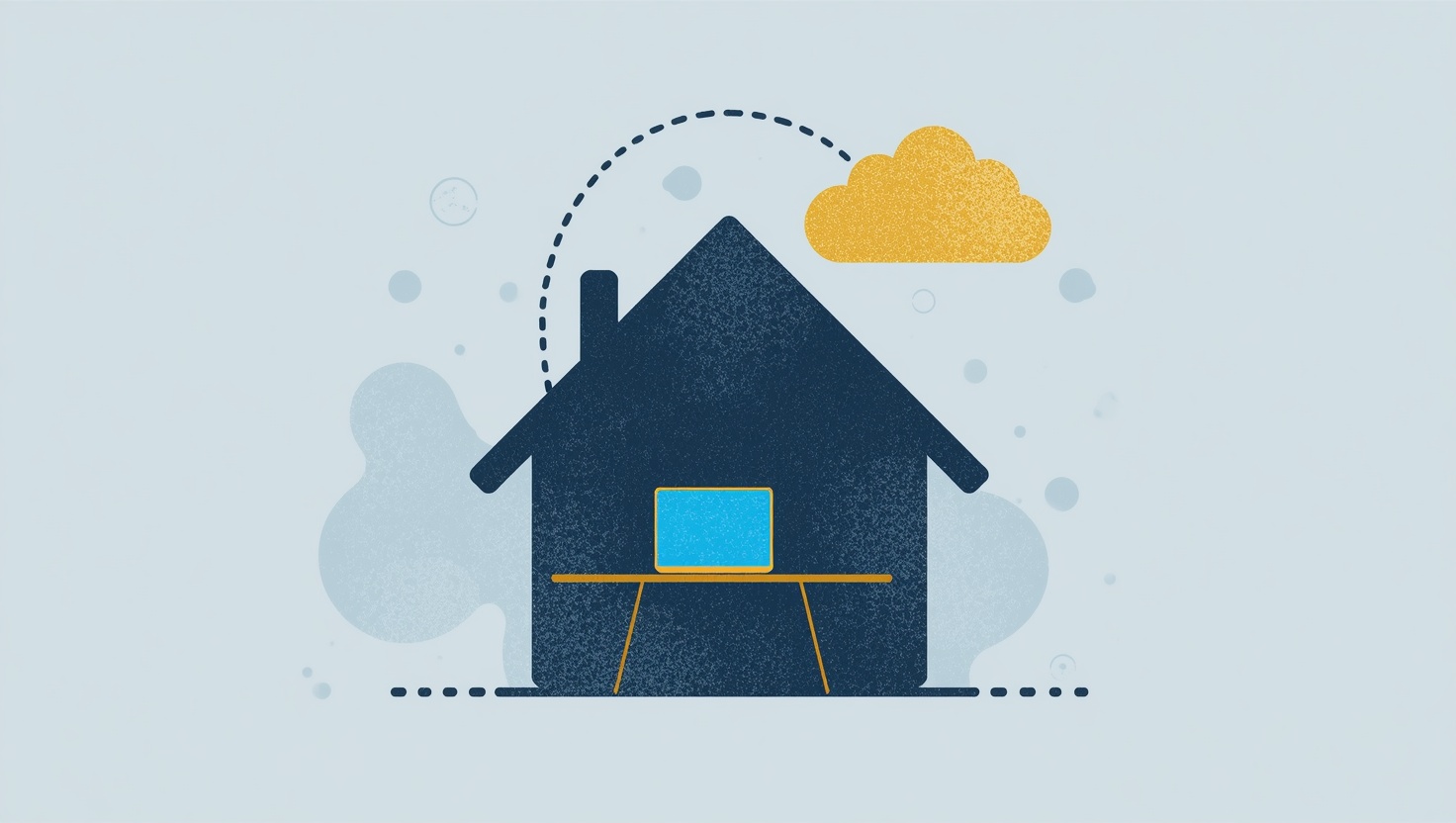
When people work from home, the IT desk loses the tool it relied on most: walking over. The laptop sits behind a home router, the person using it may not know what an IP address is, and the problem tends to show up at the worst moment. A phone call that starts with "what do you see on the screen now?" can take half an hour.
Remote desktop software closes most of that gap, but only if it is set up for the way home work actually happens. These are the things that make the difference.
Put the software on the machine before it is needed
The slowest support call is the one that begins with installing something. Install HopToDesk on every laptop when it is handed out, and link it to your dashboard so it appears in your device list. When a call comes in, the machine is already there.
For computers you do not manage, such as a contractor's own laptop, the person downloads HopToDesk, opens it, and reads you the ID and the one-time password it shows. That password changes, so it is useless once the session is over.
Connections that work through a home router
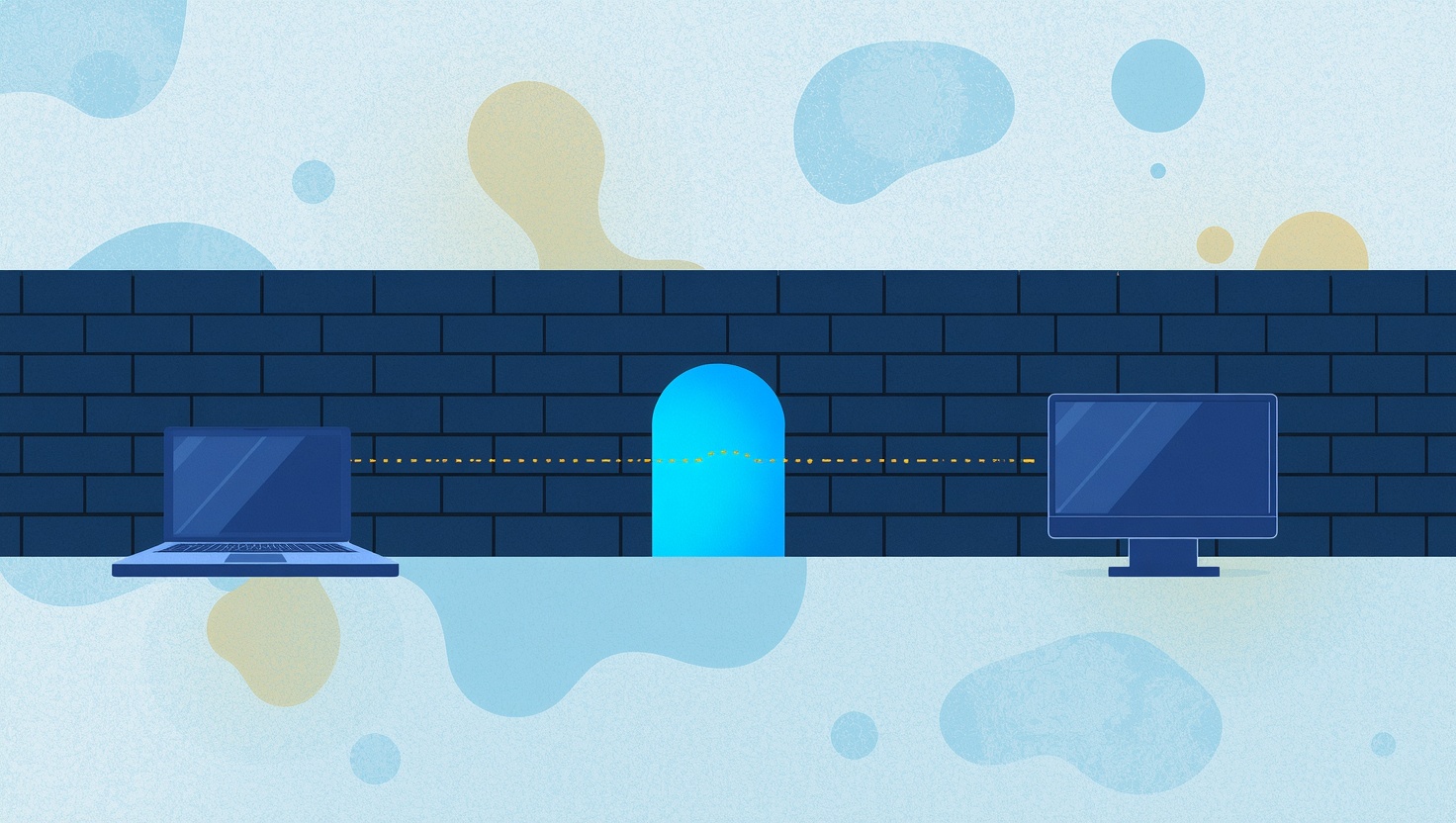
Home networks are all different, and nobody wants to talk a colleague through port forwarding. HopToDesk needs no router changes and no VPN. The two computers find each other through the HopToDesk network, connect directly when they can, and go through a relay when they cannot.
Some networks are stricter than a home router: a hotel, a hospital guest network, a café that only allows web traffic. For those, Firewall Mode carries the whole session over port 443, the same port as ordinary web browsing.
Plan for both directions
Working from home creates two kinds of remote access, and it pays to plan for both.
- Support. IT connects to the home worker's laptop to fix something, with the person watching.
- Access. The home worker connects to their own office computer to reach software or files that only live there. With unattended access switched on for that computer, nobody has to be in the office to accept the connection. If the office computer is asleep and set up for Wake-on-LAN, the dashboard can wake it through another computer that is online on the same office network.
Keep the person at the keyboard in charge
Support in someone's home needs trust. While a session runs, the person sees a small connection window that shows who is connected. They can chat with the technician from it and end the session at any time. Every session is end-to-end encrypted, and both sides can compare a security code to confirm that nobody sits in the middle.
At home the screen is often in a shared room. When a technician needs to work on something private, such as a payroll system, Privacy Mode blanks the remote screen so housemates do not see it. It works on Windows and macOS.
Small things that save a lot of time
- File transfer, so a log file or an installer moves between the two computers without email.
- Copy and paste text between the two computers.
- Several monitors on the remote computer: view one at a time, or all of them side by side.
- Remote Terminal, a command line on the remote computer for jobs that do not need the desktop at all.
Every platform in the house
Home workers use whatever they have: a Windows laptop from work, a personal Mac, a Linux machine, a phone. HopToDesk runs on Windows, macOS, Linux, Android and iOS, so the technician's device and the home worker's computer do not have to match.
The goal is easy to state. Helping someone at home should take no longer than walking over to their desk used to. With the software already in place and a connection that does not care about the home network, it often takes less.